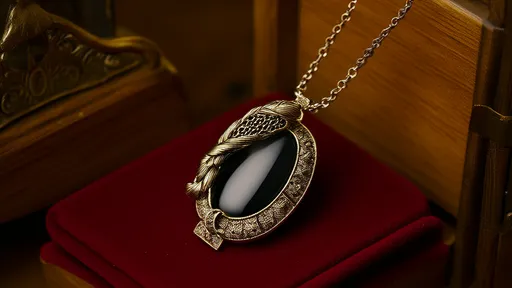
The resurgence of antique jewelry in contemporary fashion has taken an unexpected turn, with Victorian-era mourning jewelry experiencing a peculiar renaissance among Generation Z. Once a niche collector’s item, these somber yet intricate pieces—often crafted from jet, onyx, or woven hair—are now flaunted on social media platforms like TikTok and Instagram, where their macabre elegance resonates with a generation fascinated by themes of mortality, nostalgia, and subversion.
Mourning jewelry, a hallmark of the Victorian era (1837–1901), was designed to commemorate the dead. Queen Victoria herself popularized the trend after the death of her beloved Prince Albert in 1861, wearing black jet jewelry and commissioning pieces containing locks of his hair. The jewelry served as both a personal keepsake and a public display of grief, often inscribed with the deceased’s name, dates, or sentimental messages. What was once a symbol of loss has now been reinterpreted by young consumers as a statement of individuality, historical connection, and even irony.
Why does a generation known for its digital savviness and fast-fashion consumption gravitate toward such relics of the past? The answer lies in a confluence of cultural shifts. Gen Z’s embrace of vintage and sustainable fashion aligns seamlessly with the ethos of repurposing antique jewelry. Unlike mass-produced accessories, mourning jewelry carries a tangible history—each piece tells a story, a quality that appeals to a cohort increasingly skeptical of disposable consumerism. Moreover, the jewelry’s dark aesthetic dovetails with the rising popularity of "dark academia" and gothic fashion, which romanticize melancholy and intellectualism.
Social media has played a pivotal role in this revival. Platforms like TikTok have become virtual museums where users showcase their finds, decode symbolism (such as the meaning of urn motifs or hairwork), and even trade tips on where to source authentic pieces. The hashtag #MourningJewelry has amassed millions of views, with influencers pairing Victorian brooches with streetwear or layering them over minimalist outfits. This juxtaposition of old and new creates a visual tension that feels fresh yet steeped in tradition.
The emotional weight of mourning jewelry also strikes a chord with Gen Z. In an era marked by global crises—from climate anxiety to the pandemic—young people are no strangers to grief. Wearing a 19th-century mourning piece becomes a way to acknowledge collective loss while reclaiming agency over how that grief is expressed. Unlike the Victorians, who adhered to strict mourning rituals, today’s wearers infuse these items with personal meaning, whether as a tribute to a lost loved one or simply as a memento mori.
Critics might dismiss the trend as mere aesthetic posturing, but the demand for authenticity suggests otherwise. Auction houses and antique dealers report a surge in inquiries from younger buyers, with prices for rare pieces climbing steadily. Some artisans have even begun creating modern reinterpretations, blending traditional techniques like hairwork with contemporary designs. This fusion honors the past while ensuring the craft’s survival, much like Gen Z’s broader approach to cultural preservation.
Ultimately, the revival of Victorian mourning jewelry speaks to a deeper yearning for connection—to history, to craftsmanship, and to the universal human experience of loss. In a world that often feels ephemeral, these artifacts offer permanence. And for a generation accused of living online, the tactile allure of a hand-carved jet pendant or a sepia-toned photograph locket provides a grounding counterbalance. The past, it seems, has never felt more present.
By /Jun 24, 2025
By /Jun 24, 2025
By /Jun 24, 2025
By /Jun 24, 2025
By /Jun 24, 2025
By /Jun 24, 2025
By /Jun 24, 2025
By /Jun 24, 2025
By /Jun 24, 2025
By /Jun 24, 2025
By /Jun 24, 2025
By /Jun 24, 2025
By /Jun 24, 2025
By Ryan Martin/Apr 27, 2025
By James Moore/Apr 27, 2025
By Megan Clark/Apr 27, 2025
By Benjamin Evans/Apr 27, 2025
